 📷 City Limits
Opinion: Laying the Foundation for NYC's Small Business Renaissance - City Limits
"If we want a small business renaissance, we have to stop treating empty storefronts as acceptable collateral damage of financial regulatory happenstance and start seeing them for what they are: a policy choice."
"If we want a small business renaissance, we have to stop treating empty storefronts as acceptable collateral damage of financial regulatory happenstance and start seeing them for what they are: a policy choice."
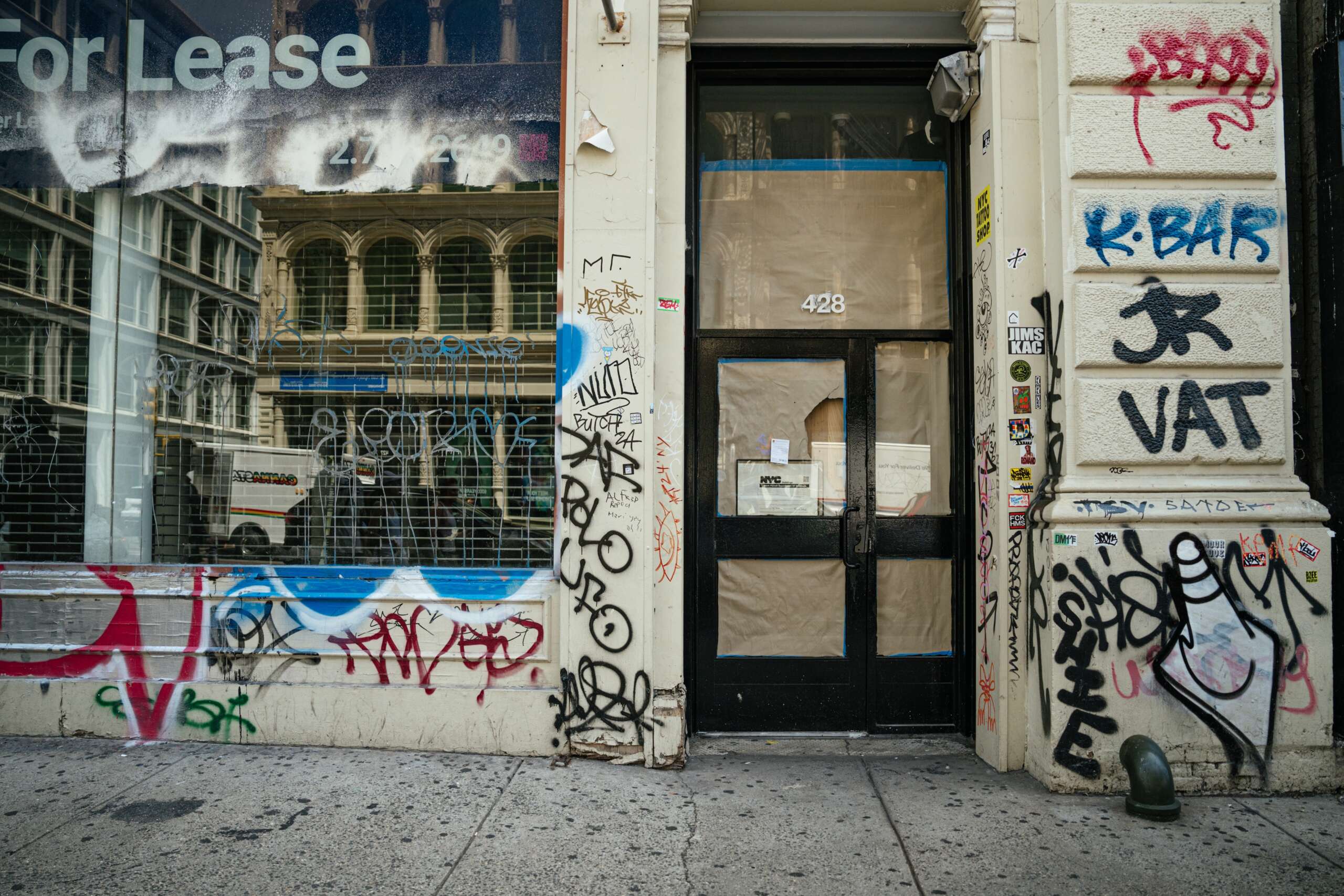
Walk down certain blocks in Lower Manhattan or Western Queens and you can count every third gate pulled down where a restaurant or bodega used to be, with its “For Rent” sign often weathered from years of exposure to the elements.
According to the city comptroller’s office , roughly 15,700 storefronts sit vacant across the five boroughs—about 11 percent of all commercial spaces—with some corridors pushing 20 percent vacancy or more. These patches don’t just look bad. They drain the life out of neighborhoods that would otherwise feel very much alive.
We’ve gotten used to explaining this away as fallout from the pandemic or blaming it on “greedy landlords” waiting for a corporate tenant. The whole story is more nuanced. New York has quietly and gradually built a system in which keeping a storefront empty can make more sense on the landlord’s spreadsheet than renting it to a local business. That is not a moral failing of individual owners so much as a policy failure—and it’s one we can fix, starting with the NYC Small Business Rent Stabilization Act, but more on that later.
First, it is important to dispel a common myth about the cause behind this phenomenon. There is no special tax deduction for keeping a storefront vacant. Owners can deduct mortgage interest, property taxes, and maintenance whether a space is filled or not, but they can’t write off rent they never collected. When a gate is down, the owner is still paying taxes, insurance, and debt service every month. A vacant storefront really does bleed money.
So why would anyone choose years of bleeding over a lower, realistic rent? Because commercial real estate in New York is financed and valued almost entirely on stabilized income potential and assessed rent levels, not on whether a local business is open on the corner. A closer look at what
actually causes this begins with a journey into the seemingly grey world of appraisers and lenders. It is in the market dynamics and regulatory frameworks that govern nearly all aspects of these few basic cogs in the economic engine where the true root cause of these undesirable external realities on the street are found.
Appraisers and lenders look at net operating income, capitalization rates, and the rent rolls, and they reward high rents from “credit‑worthy” (corporate) tenants with higher valuations and better loan terms. In hot corridors that saw a heated rent bubble before the pandemic, owners and their bankers have baked in very ambitious future rent assumptions. If those assumptions crumble, so do the numbers underpinning the mortgage.
In many cases this not only relates to the mortgage used to finance the purchase of the property itself, but often the buildings (and their typically inflated appraised income potential) are used as collateral to finance other properties, development loans or nearly any other class of financeable asset.
These chains of over-valuations that compound over time are the stuff market bubbles are made of, and the commercial real-estate market is sitting firmly atop exactly such a bubble. Seeing this from the perspective of landlords, banks and the chain of interests bound into these assets, one of the chief arguments for starting to pull the policy levers that are effectively the only cooling rods available in this kind of reactor is to govern and legislate towards an off-ramp for market
overheating, a “soft landing” to prevent a cataclysmic crash in this sector of the economy.
What this broadly translates to is: commercial rents must come gradually down. Not just for the vibrancy of our great cities to return. Not just for the dreams of ordinary people whose ingenuity, drive and natural desire is to build businesses that fill real needs and employ people meaningfully and locally. Not just for opportunity and hard earned prosperity to be within reach for people of all ethnicities and class backgrounds but also, not least, for the giant commercial real estate sector to steer clear of igniting what could be an economy-wide free-fall “correction” in the not-so-distant future.
Recent research on Manhattan storefronts shows how the prevailing logic currently dictating the business practices of lenders and appraisers creates what economists call “option value.” Landlords with long fixed leases and costly eviction rules have a strong incentive to wait for a tenant who can pay at or near the peak rent for that space, because locking in a low rent today means under‑earning for 10 years.
In New York, that incentive is sometimes hardened into contract. Some commercial mortgages now include rent floors—covenants that effectively forbid signing leases below a specified rent per square foot. When the real local market falls beneath those floors, the choice isn’t between “some rent” and “no rent.” It’s between breaching the loan by accepting reality, or enduring vacancy until someone appears who can satisfy the covenant.
From the sidewalk, that looks like stubborn greed. From the bank’s point of view, it looks like discipline. Either way, the result is the same: ghost corridors in a city that prides itself on vibrancy and street life.
News and civic updates are curated for public community information. AI168 maintains an objective, non-partisan platform.← Back to News