 📷 City Limits
Opinion: Why Are So Few NYC Houses of Worship Sheltering People? - City Limits
"Tonight, thousands of New Yorkers will again sleep outside, including people who have repeatedly refused the shelter options we have offered them. Across the city, thousands of houses of worship will sit mostly empty."
"Tonight, thousands of New Yorkers will again sleep outside, including people who have repeatedly refused the shelter options we have offered them. Across the city, thousands of houses of worship will sit mostly empty."
Tonight, thousands of our neighbors will sleep on the streets, in the subway system, and in public parks.
People will often ask me, as someone who works on the front lines of our homelessness crisis, how and why this could be. They ask questions like: "Isn’t New York City the only major metropolitan area in the United States bound by a court-mandated, year-round right to shelter?" and "Isn't the Department of Homeless Services’ budget for this fiscal year $4.2 billion?"
In more than a decade of working with New Yorkers experiencing homelessness, I have heard from our unhoused neighbors the same explanation again and again: For many, sleeping on the street feels safer than entering the shelter system.
Many have told me about theft or assault in shelters. Others describe losing their sense of identity, being reduced to a bed or room number, having to fit all of their possessions into two bags, or being separated from their pets.
For people who have already experienced enormous trauma, trust can be extraordinarily difficult to rebuild. And for people who have simply fallen on hard times, entering a large congregate shelter can be intimidating, particularly when they may need to share close quarters with people experiencing acute mental health or substance use challenges or returning from incarceration.
Our outreach workers do incredibly hard and necessary work. They look our neighbors in the eye, give them water on the hottest days and hand warmers on the coldest, and work tirelessly to connect them with shelter and other services. They will engage the same people, day after day, rain or shine, only to be told that they do not want to go into shelter.
New York City can continue to pour billions of dollars into outreach , but even the best outreach worker cannot persuade someone to come inside if we cannot offer them a place they believe is safe.
The simple truth is that our neighbors on the street need spaces where they can lay their heads at night and experience compassion, dignity, and community. And we do not need to build those spaces from scratch. Thousands of them have substantial empty space every evening and are waiting to be activated. They are called synagogues, mosques, churches, and gurdwaras.
The idea is exciting, but it is hardly new. Beginning under Mayor Koch in 1981, dozens of houses of worship partnered with drop-in centers to shelter New Yorkers experiencing homelessness each evening. The model was relatively simple: guests would arrive at a drop-in center and be bussed to a participating house of worship staffed by volunteers, where they would receive a warm bed, showers, dinner, and breakfast.
Only a few people would stay in each space on a given night—a stark contrast to large congregate shelters where hundreds might sleep barracks-style in a single room. In the morning, guests would be transported back to the drop-in center. For decades, this transient but reliable system provided a dignified alternative for people reluctant to enter the city’s crowded municipal shelter system.
Then came COVID, and our city’s shelter system moved away from congregate settings. Funding for transportation to and from drop-in centers dried up. Many volunteers understandably stayed home. The house of worship-based shelter network went comatose, and six years later, we still have not rebuilt the infrastructure needed to wake it up.
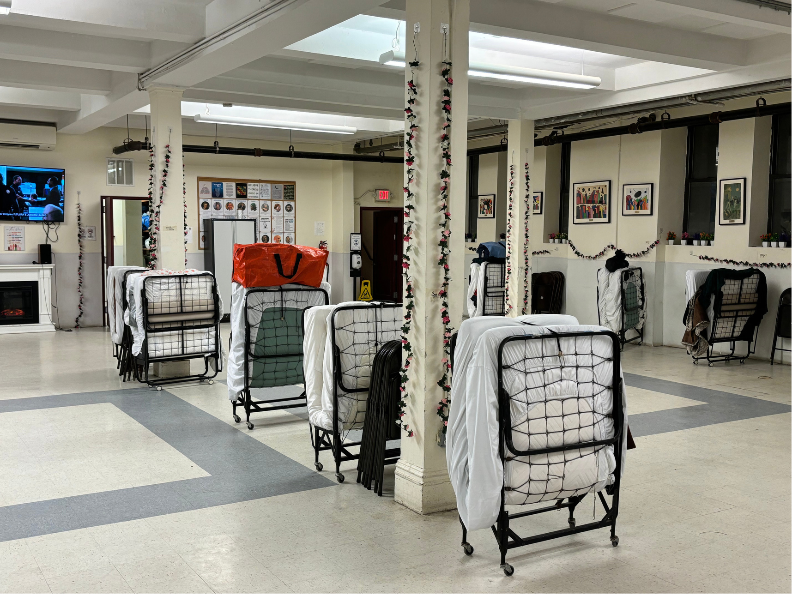
Today, only a handful of our city’s 5,000 houses of worship shelter people each evening. One of them is Broadway Presbyterian Church, where my organization, Broadway Community , has served New Yorkers in need for more than 45 years.
Each night, we shelter 19 pre-screened single adult men and women who would otherwise be sleeping on the street. Our staff and security ensure that the space is safe and that our guests are treated with hospitality and respect. Our cook prepares a hot, homemade dinner, and guests can shower and do their laundry.
At 7 a.m., they wake up to a hot breakfast, and by 8 a.m., most are out of the building. Some go to work, and others stay until our soup kitchen and other daytime programs begin at 10 a.m. We are paid $75 per bed per night through a city-funded outreach contract, which allows us to employ overnight staff and case managers, purchase food, and cover the cost of space and utilities.
News and civic updates are curated for public community information. AI168 maintains an objective, non-partisan platform.← Back to News